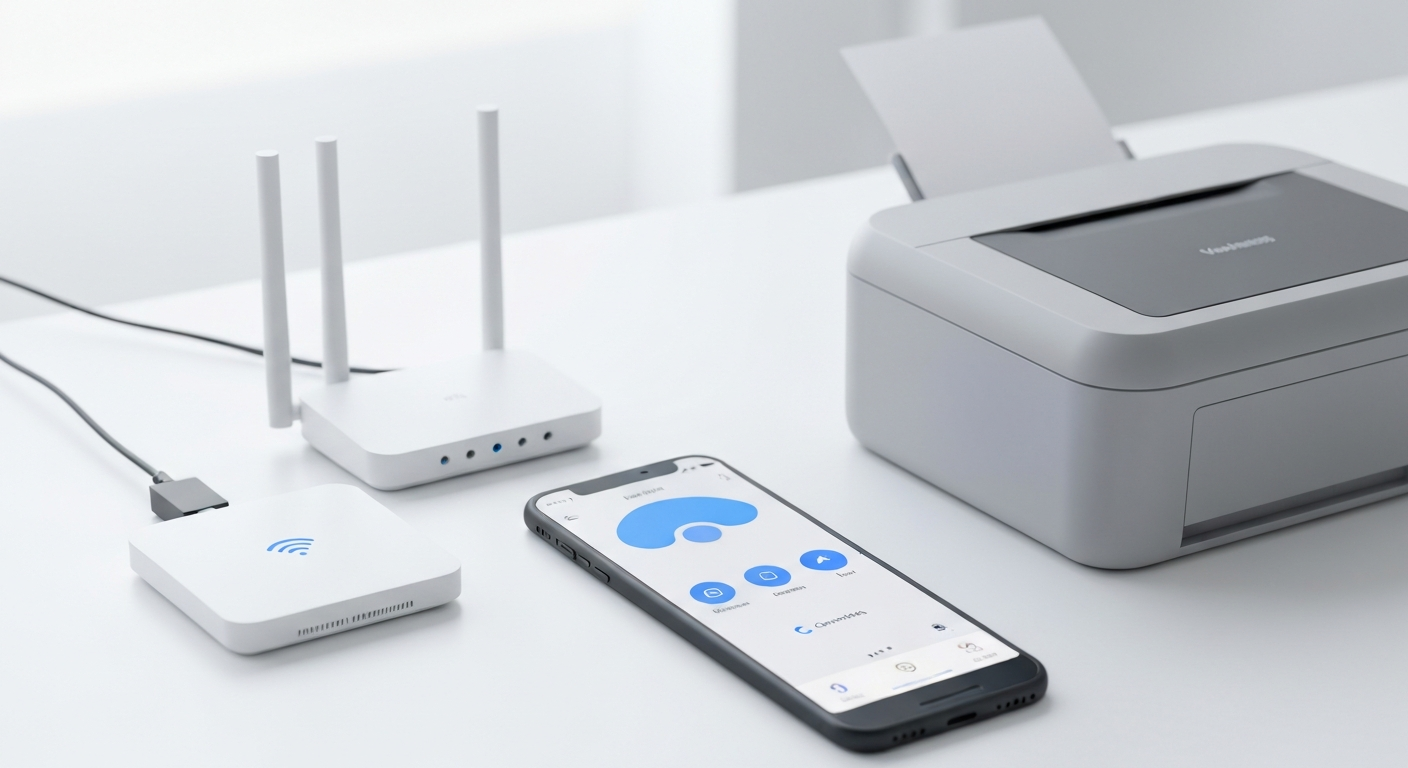
For years, Google Cloud Print was the answer to a simple question: how do I print from my phone or Chromebook when my printer is connected to a computer in another room? You linked your Google account, registered the printer, and print jobs traveled through Google’s servers to wherever your printer lived. It worked across brands, across operating systems, and without much setup beyond installing a Chrome extension on the host computer.
Then Google killed it. Google Cloud Print shut down on December 31, 2020 — no migration path, no official replacement, just a support page explaining that local printing and manufacturer apps should cover the gap. Five years later, people still search for “google cloud print alternative” because old tutorials, school IT documentation, and forum posts reference a service that no longer exists.
This guide explains what Cloud Print actually did, why it is gone, and what works in 2026 instead — organized by whether you print from iPhone, Android, Chrome, or a Chromebook.
What Google Cloud Print Did
Google Cloud Print (GCP) was a cloud-based printing service that let you send print jobs to any printer registered with your Google account — regardless of where you were physically located. The printer did not need to be on the same Wi-Fi network as your phone or laptop.
The typical setup looked like this:
- A printer was connected to a Windows, Mac, or Linux computer (or a Cloud Print-ready printer with native support).
- The Google Chrome browser on that computer ran the Cloud Print connector, registering the printer with your Google account.
- From any device signed into the same Google account — Android phone, Chromebook, Chrome on another computer — you could select that printer and print remotely.
GCP also supported “classic” printers through the connector and a small number of printers with native Cloud Print support built into their firmware. Schools and small offices relied on it heavily because one admin could share a printer with an entire organization through Google Workspace.
What made it unique was the cloud routing layer. Your phone did not talk to the printer directly. It talked to Google, and Google forwarded the job to whichever device was hosting the printer. That enabled remote printing — send a job from your phone at a coffee shop to your home printer — but it also meant Google processed your documents, a computer had to stay on at home, and the entire system depended on a free Google service continuing to exist. It did not.
Why Google Shut It Down
Google’s official explanation was that cloud printing had become unnecessary. Operating systems and printer manufacturers had caught up: Windows, macOS, iOS, and Android all gained native wireless printing. AirPrint on Apple devices and Mopria on Android handled local network printing without a cloud middleman. Manufacturer apps added their own cloud print features for remote access.
That explanation is mostly fair. For home users with a Wi-Fi printer, Cloud Print was redundant by 2020. The people who lost the most were organizations running fleets of older USB printers through Cloud Print connectors, and Chromebook users who depended on GCP as their primary print method.
Google did not replace Cloud Print with a new universal service. Instead, printing fragmented across:
- Local network protocols (AirPrint, Mopria, Wi-Fi Direct)
- Manufacturer cloud services (HP Smart, Epson Connect, Canon PRINT)
- OS-native print dialogs (Windows, macOS, iOS, Android)
No single service picked up the cross-brand, cloud-routed model. That is the gap people still feel when they search for alternatives.
The Best Google Cloud Print Alternatives in 2026
The right replacement depends on your device and what you actually need — local printing at home, or remote printing from outside your network.
For iPhone and iPad: AirPrint
AirPrint is the default answer for Apple users, and it is genuinely good. Connect your printer to Wi-Fi, put your iPhone on the same network, open any document, tap Share, then Print. Your printer appears in the list. No Google account, no cloud service, no computer left running.
AirPrint works with most modern Wi-Fi printers from HP, Canon, Epson, Brother, and others. Our AirPrint compatible printers guide lists what to look for, and our print from iPhone guide walks through the full workflow.
Compared to Cloud Print, AirPrint is local only — your phone and printer must share a network. You cannot print to your home printer from a hotel Wi-Fi unless you set up a separate remote printing solution. For the 90% of print jobs that happen at home or in the office, that limitation rarely matters.
One habit AirPrint does not replace is the part of Cloud Print people actually miss: having a single place you sent things to be printed. AirPrint has no library, so every job starts from whichever app the file happens to live in.
Smart Printer is a third-party iOS app that puts that back. It is not affiliated with Google or any printer brand, and it does not recreate Cloud Print’s remote routing — it prints over AirPrint to printers on your own network.
Closest to the Cloud Print habit (iPhone only)
Smart Printer
- One library for documents, photos, and scans instead of hunting through apps
- Import from Files, Photos, email, and cloud storage
- Camera scanning with auto-crop, straight to print or PDF
- Prints to any AirPrint printer, any brand, over your local network
To be clear about the limits: this is iPhone and iPad only, and it prints locally. If you specifically need to send a job to your home printer from somewhere else, skip to the remote printing section below — no third-party app covers that.
For Android: Built-In Print Service
Android has shipped a native print framework since Android 4.4. In most apps — Chrome, Gmail, Google Docs, Photos — tap the three-dot menu, select Print, and choose a printer on your local network.
If your printer does not appear:
- Confirm both phone and printer are on the same Wi-Fi network.
- Install your printer manufacturer’s app (HP Smart, Canon PRINT, Epson Smart Panel, Brother Mobile Connect).
- Check that the printer’s Wi-Fi is active and not in deep sleep mode.
Our print from Android guide covers the step-by-step process and common fixes. For a cross-platform overview, see print from phone.
Android’s print service uses the Mopria standard for many printers, which is the Android equivalent of AirPrint — a local network protocol without cloud routing. Some manufacturers add their own print service plugins that you can enable in Android Settings under Connected devices → Printing.
For Chrome and Chromebooks
On desktop Chrome, printing works through your operating system’s print dialog — File → Print, or Ctrl+P / Cmd+P. Select any printer on your local network. No Google Cloud Print option appears because it no longer exists.
Chromebooks use a similar local print model. Add your printer in Chromebook Settings under Advanced → Print and scan → Printers, then print from any app. Chromebooks support AirPrint-compatible printers and many Mopria printers directly.
If you are on a Chromebook and your printer does not appear, check whether the manufacturer offers a Chromebook-compatible setup through their app or a Google Play Android app on newer Chromebooks.
For Remote Printing (Outside Your Network)
This is where Cloud Print had no true universal successor. Options in 2026 are brand-specific:
- HP Smart — HP’s app can register your printer for remote printing through HP’s cloud. Send a job from your phone on cellular data to your home HP printer.
- Epson Connect — Epson’s email print and remote print features work through Epson’s servers, not Google’s.
- Canon PRINT — Canon offers similar cloud printing for imageRUNNER and PIXMA models.
Each requires creating an account with the manufacturer, enabling remote access in the app, and accepting that your print jobs route through that company’s servers. There is no cross-brand cloud print service that works like GCP did.
If remote printing is essential — printing to your home printer from a hotel, for example — pick a manufacturer with a reliable cloud print feature and enable it during setup. For everyone else, local network printing covers daily needs.
Manufacturer Apps as Cloud Print Replacements
Before Cloud Print, you installed printer drivers. After Cloud Print, manufacturer apps filled the gap for mobile users who needed more than the OS print dialog offered.
| App | Brands | Local Print | Remote Print | Scanning |
|---|---|---|---|---|
| HP Smart | HP | Yes | Yes (HP cloud) | Yes |
| Canon PRINT | Canon | Yes | Limited | Yes |
| Epson Smart Panel | Epson | Yes | Yes (Epson Connect) | Yes |
| Brother Mobile Connect | Brother | Yes | Limited | Yes |
These apps are the practical replacement for anyone who used Cloud Print through a manufacturer’s connector. They handle Wi-Fi setup, mobile printing, scanning, and in some cases remote access — all without Google.
The trade-off is brand lock-in. HP Smart works best with HP printers. If you own printers from multiple brands, you need multiple apps, or you rely on AirPrint and Mopria for local printing and skip the manufacturer layer entirely.
Our best printer apps guide compares these options honestly, including when the built-in OS print dialog is the better choice.
Setting Up Local Network Printing (The Cloud Print Replacement Most People Need)
If you used Cloud Print simply to print from your phone to a home printer, you do not need a cloud service at all. You need your printer on Wi-Fi.
Step 1: Connect the printer to Wi-Fi. Use the printer’s touchscreen, WPS button, or the manufacturer’s mobile app. Our connect printer to phone guide covers the process for every major brand.
Step 2: Connect your phone to the same network. Not guest Wi-Fi, not cellular — the same router and network name the printer uses.
Step 3: Print. On iPhone, Share → Print. On Android, menu → Print. On Chrome desktop, Ctrl+P. Select your printer and send the job.
That is the entire replacement for the most common Cloud Print use case. No Google account, no connector software, no computer running 24/7.
If your printer supports AirPrint or Mopria, it appears automatically. If it does not, install the manufacturer app or check our AirPrint compatible printers list to see whether your model is supported under a different protocol.
What About Printers That Only Worked Through Cloud Print?
Some older printers had native Cloud Print support but no AirPrint and no Wi-Fi. These are the hardest cases in 2026.
Your realistic options:
-
Upgrade the printer. Modern Wi-Fi printers with AirPrint or Mopria cost less than the frustration of maintaining workarounds. If your printer is more than eight years old and lacks Wi-Fi, this is the most practical path.
-
Use a computer as a print server. A Mac or PC connected to the printer via USB can share it on the local network. macOS calls this “Printer Sharing” in System Settings. Windows has a similar feature. This replaces the Cloud Print connector with a local alternative — but the computer must stay on.
-
Add a wireless print server. A small hardware adapter plugs into the printer’s USB port and adds Wi-Fi. Quality varies, and AirPrint support is not guaranteed. Read reviews carefully before buying.
-
Raspberry Pi or home server. Enthusiasts run print server software on a Raspberry Pi. This works but requires technical setup well beyond what Cloud Print demanded.
For most households, option 1 — a new printer with Wi-Fi and AirPrint — is the cleanest solution. Printers are inexpensive relative to the time spent fighting compatibility.
Google Cloud Print vs. Modern Alternatives
| Feature | Google Cloud Print (defunct) | AirPrint (iPhone) | Android Print | Manufacturer Apps |
|---|---|---|---|---|
| Cross-brand | Yes | Yes (AirPrint printers) | Yes (Mopria printers) | No (one brand each) |
| Remote printing | Yes | No (local only) | No (local only) | Some brands |
| Cloud dependency | Google servers | None | None | Manufacturer servers |
| Computer required | Yes (for classic printers) | No | No | No |
| Document privacy | Jobs pass through Google | Local network only | Local network only | Varies by brand |
| Still available | No (ended 2020) | Yes | Yes | Yes |
The biggest shift is from cloud-routed to local-network printing. That is faster, more private, and more reliable — but it means you cannot print to your home printer from across the country unless you set up a brand-specific remote print feature.
Troubleshooting Post-Cloud Print Printing
Printer does not appear on phone. Same Wi-Fi network is the first check. Restart the printer. On Android, go to Settings → Connected devices → Printing and confirm a print service is enabled. On iPhone, if AirPrint fails, see our AirPrint not working guide.
Old Chromebook still shows Cloud Print. Remove the dead Cloud Print printers from your Chromebook settings and add the printer again using local network discovery. Update Chrome OS to the latest version.
School or office relied on Cloud Print. IT departments should migrate to Google Workspace printing through CUPS servers, PaperCut, or direct IP printing — or use manufacturer management tools. There is no Google-hosted replacement to enable.
Printer shows offline. Our fix printer offline guide covers the common causes — sleep mode, IP address changes, and network isolation.
The Bottom Line
Google Cloud Print is not coming back, and nothing exactly like it exists in 2026. That sounds like a loss, but for most home and small office users, the replacements are better: AirPrint and Mopria print locally without cloud dependency, manufacturer apps handle setup and maintenance, and you no longer need a computer running Chrome as a print bridge.
Install your printer on Wi-Fi, use AirPrint on iPhone or Android’s print service on Android, and keep a manufacturer app installed for ink monitoring and firmware updates. If you need remote printing, enable your brand’s cloud feature in HP Smart, Epson Connect, or equivalent.
The era of universal cloud printing through Google is over. The era of local wireless printing that actually works is well underway.